
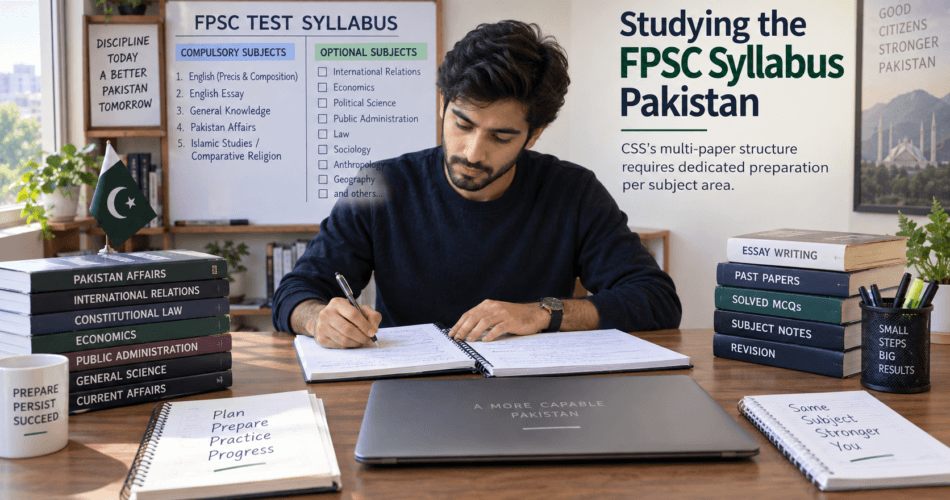
FPSC Test Syllabus and Pattern
Quick Answer: The FPSC test syllabus differs meaningfully between CSS and other FPSC-administered posts: CSS involves multiple written papers spanning compulsory subjects (including English essay, general knowledge, and Pakistan affairs) and optional subjects chosen by the candidate, while non-CSS posts typically follow a more streamlined single-paper structure focused on the specific role’s requirements. Understanding which structure applies to your target post before starting preparation ensures your study time is allocated according to the exam you’re actually taking, not a generic assumption.
Studying for “the FPSC test” as if it were one uniform exam is a common and costly mistake, since CSS and other FPSC-administered posts follow genuinely different syllabus structures. This guide breaks down how the FPSC test syllabus typically works for CSS specifically, how non-CSS posts generally differ, and how to build a study plan around whichever structure actually applies to you.
Table of Contents
- The CSS Written Exam Structure
- How the Syllabus Differs for Non-CSS Posts
- Compulsory Subjects Overview
- Choosing and Preparing Optional Subjects
- Building a Study Plan
- Common Mistakes
- Frequently Asked Questions
The CSS Written Exam Structure
Direct Answer: CSS involves multiple written papers combining compulsory subjects — typically including English essay, English precis and composition, general knowledge, and Pakistan affairs — with optional subjects the candidate selects from an approved list.
This multi-paper structure is what makes CSS preparation significantly more demanding than most other FPSC-administered exams, since candidates need to build both broad general knowledge and depth in their chosen optional subjects, sat across separate papers over the course of the written exam period.
How the FPSC Test Syllabus Differs for Non-CSS Posts
Direct Answer: Non-CSS FPSC posts typically follow a more streamlined syllabus, often a single comprehensive paper or a smaller number of papers focused specifically on the role’s requirements rather than CSS’s broad compulsory-plus-optional structure.
A technical FPSC post, for example, might test primarily subject-specific knowledge relevant to that role alongside a general aptitude component, rather than the extensive general-knowledge and essay-writing components central to CSS. This is exactly why CSS preparation material doesn’t transfer directly to most non-CSS FPSC posts.
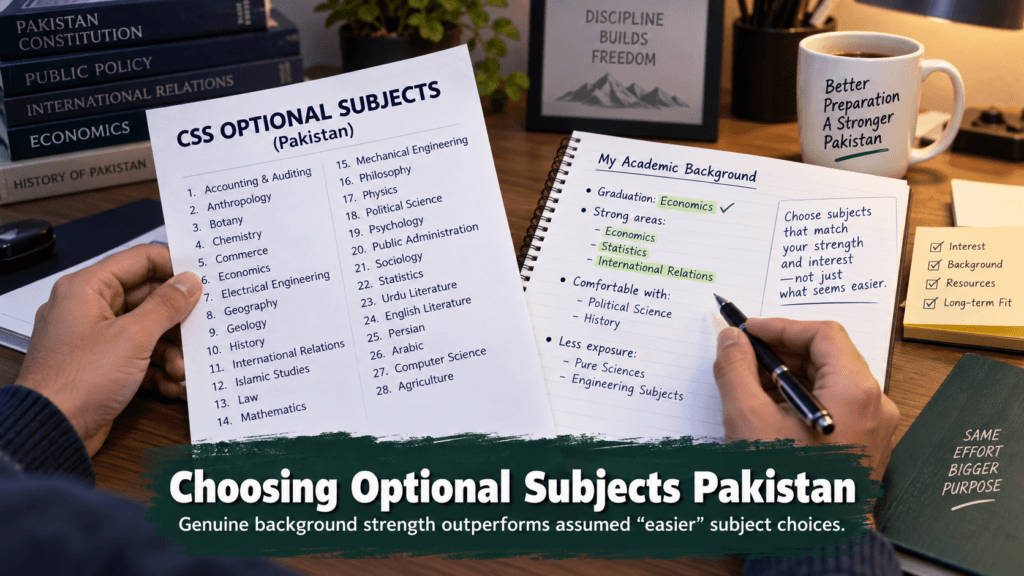
Genuine background strength outperforms assumed “easier” subject choices.
Compulsory Subjects: What They Typically Cover
Direct Answer: CSS compulsory subjects generally test English writing ability, general knowledge across multiple domains, and specific knowledge of Pakistan’s history, geography, and current affairs.
The English components in particular test structured, formal writing ability rather than conversational English, which is why candidates often benefit from dedicated essay-writing and precis practice rather than assuming general English fluency is sufficient preparation for these specific papers.
Choosing and Preparing Optional Subjects
Direct Answer: CSS candidates select optional subjects from an approved list, and this choice significantly affects both preparation workload and, for many candidates, overall exam performance.
Choosing optional subjects based on genuine background knowledge or academic strength, rather than assumptions about which subjects are “easier,” generally produces better outcomes, since depth of preparation matters more in optional subjects than in the broader compulsory papers.
Examples: A candidate with a strong academic background in a specific subject area often performs better choosing that as an optional subject than choosing an unfamiliar subject perceived as having an easier syllabus on paper.
Building a Study Plan Around This Syllabus
Direct Answer: An effective CSS study plan allocates dedicated time separately to compulsory subjects, chosen optional subjects, and essay-writing practice, rather than treating preparation as one undifferentiated study block.
Practical Guidance: Given the syllabus breadth, sequencing preparation — building general knowledge foundations first, then layering in optional subject depth, with essay-writing practice running throughout — tends to work better than attempting all components simultaneously from the start.
Pro Tip: A practical first step for any FPSC post: get the current, official syllabus document for your specific post directly from FPSC before starting to study, since syllabus details are reviewed periodically and a generic understanding of “FPSC test syllabus” isn’t a substitute for the actual current document.
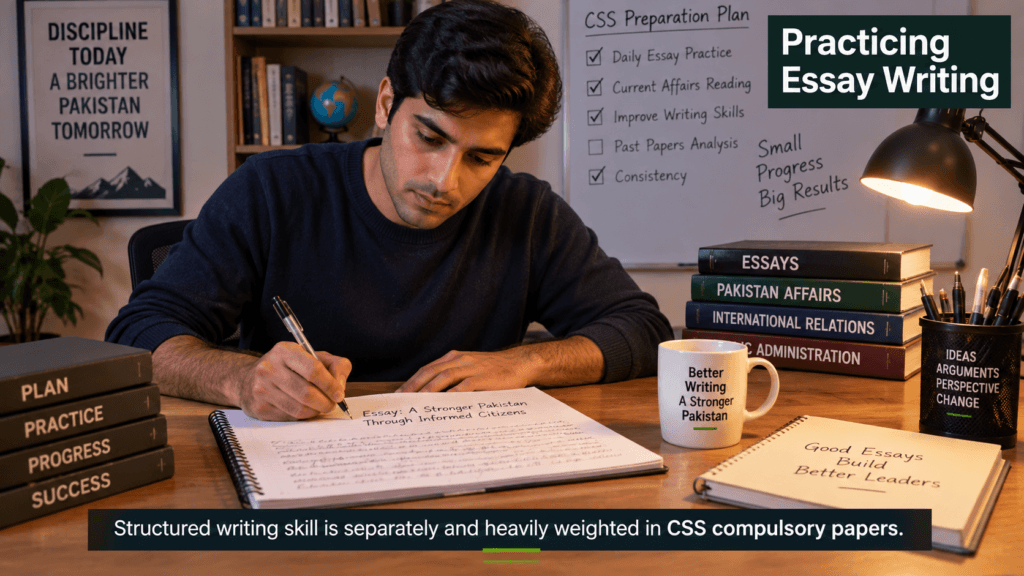
Structured writing skill is separately and heavily weighted in CSS compulsory papers.
Common Mistakes When Approaching the Syllabus
Assuming CSS’s syllabus structure applies to whatever specific FPSC post you’re targeting, without confirming the actual current syllabus for that post, is a frequent and consequential mistake. Choosing optional subjects based on perceived ease rather than genuine background strength often backfires once actual preparation depth is required. Finally, neglecting essay and precis writing practice, while over-focusing on factual general-knowledge content, leaves a meaningful gap in CSS preparation specifically, since writing quality is separately and heavily weighted.
Frequently Asked Questions
Is the FPSC test syllabus the same for CSS and other posts?
No — CSS follows a multi-paper structure with compulsory and optional subjects, while non-CSS FPSC posts typically follow a more streamlined syllabus focused on the specific role’s requirements, so confirming which structure applies to your target post matters.
How do I choose optional subjects for CSS?
Choosing based on genuine academic background or subject-matter strength, rather than assumptions about which subjects have an “easier” syllabus, generally produces better preparation depth and exam performance.
What do CSS compulsory subjects typically cover?
They generally test structured English writing ability, general knowledge across multiple domains, and specific knowledge of Pakistan’s history, geography, and current affairs, rather than conversational English or narrow factual recall alone.
Where can I find the current, official FPSC test syllabus for my target post?
The official FPSC website provides the current syllabus document for each post, which should be checked directly rather than relying on a general understanding, since syllabus details are periodically reviewed.
Summary
The FPSC test syllabus varies significantly between CSS’s demanding multi-paper structure — spanning compulsory and optional subjects — and the more streamlined syllabus typical of most non-CSS FPSC posts. Building a study plan around the actual current syllabus for your specific target post, with dedicated preparation for compulsory content, chosen optional subjects, and essay-writing skill specifically for CSS candidates, produces stronger outcomes than generic exam preparation.
Key Takeaways
- CSS follows a multi-paper structure with compulsory and optional subjects, distinct from most non-CSS FPSC posts.
- Optional subject choice should be based on genuine background strength, not assumed ease.
- CSS compulsory subjects heavily weight structured English writing, not just factual knowledge.
- Non-CSS FPSC posts typically follow a more streamlined, role-focused syllabus.
- Always confirm the current, official syllabus for your specific post before beginning preparation.
Suggested Reading
FPSC Complete Guide · FPSC Eligibility Criteria · FPSC Application Process Step-by-Step
Official Resources
For the current, post-specific syllabus document, check the official FPSC website.