
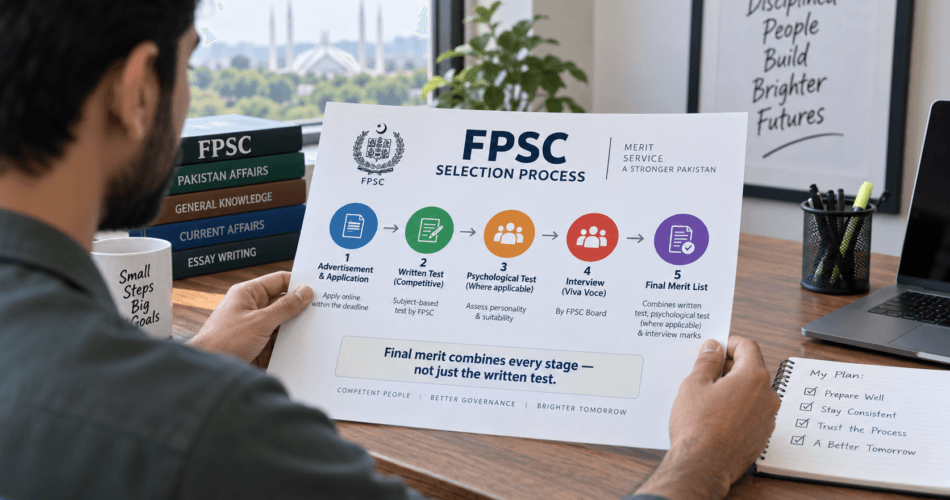
FPSC Selection Process Overview
Quick Answer: The FPSC selection process moves through five main stages: eligibility screening of submitted applications, the written test, medical and psychological examination for shortlisted candidates, the interview, and final merit list compilation combining performance across all stages. CSS follows this same general sequence but with a more extensive written exam component, while non-CSS posts often move through a comparatively more streamlined version of the same five stages.
Understanding the full FPSC selection process — not just the written test everyone focuses on — helps candidates prepare realistically for what comes after clearing that first major hurdle. This guide walks through each stage in sequence, how they connect to each other, and what determines final selection once every stage is complete.
Table of Contents
- Stage 1: Application Eligibility Screening
- Stage 2: The Written Test
- Stage 3: Medical and Psychological Examination
- Stage 4: The Interview
- Stage 5: Final Merit List Compilation
- How CSS and Non-CSS Selection Differs
- Frequently Asked Questions
Stage 1: Application Eligibility Screening
Direct Answer: Before the written test is administered, FPSC screens submitted applications against the specific post’s eligibility criteria, filtering out applications that don’t meet baseline age, qualification, or document requirements.
This screening stage is why the eligibility and documents guides elsewhere in this cluster matter as much as exam preparation itself — a candidate who would perform well on the written test but submitted an incomplete or non-compliant application never reaches that stage at all.
Stage 2: The Written Test
Direct Answer: The written test is the most demanding stage for CSS specifically, involving multiple compulsory and optional subject papers, while non-CSS posts typically involve a more streamlined single-paper or smaller-paper-count structure.
Candidates who clear the minimum qualifying threshold for the written test move forward to the next stage; those who don’t are filtered out at this point regardless of how strong their original application was. This is why genuine, structured preparation for the written test — covered in detail in the dedicated syllabus and past papers guides in this cluster — matters more than any other single stage of preparation.
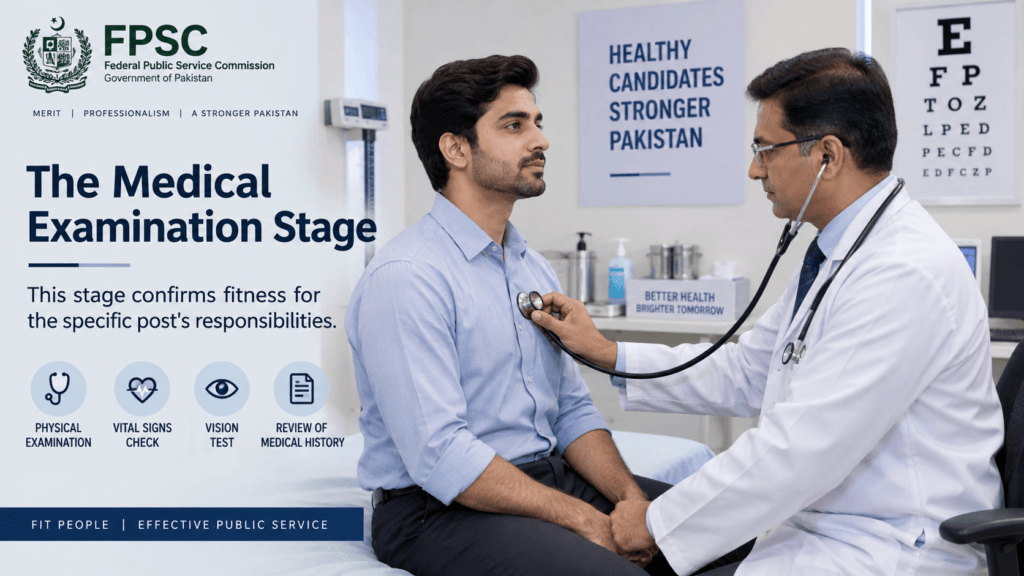
This stage confirms fitness for the specific post’s responsibilities.
Stage 3: Medical and Psychological Examination
Direct Answer: Candidates who clear the written test typically undergo a medical examination and, for certain posts, psychological assessment, confirming fitness for the specific role’s responsibilities.
This stage exists to confirm candidates meet the health and, where relevant, psychological standards appropriate to the specific post, separate from academic or interview performance. Requirements here can vary depending on the specific post’s nature — a role with field responsibilities, for example, may involve different medical standards than a purely administrative post.
Stage 4: The Interview
Direct Answer: Candidates who clear the written test and medical stage proceed to an interview evaluating communication, judgment, and overall suitability for public service responsibility, distinct from the academic knowledge already tested in writing.
The interview stage is covered in detail in the dedicated Interview Preparation guide in this cluster — the key point at this stage of the overall process is that it’s evaluated separately from written test performance, meaning strong writing skills don’t automatically translate into strong interview performance, and vice versa.
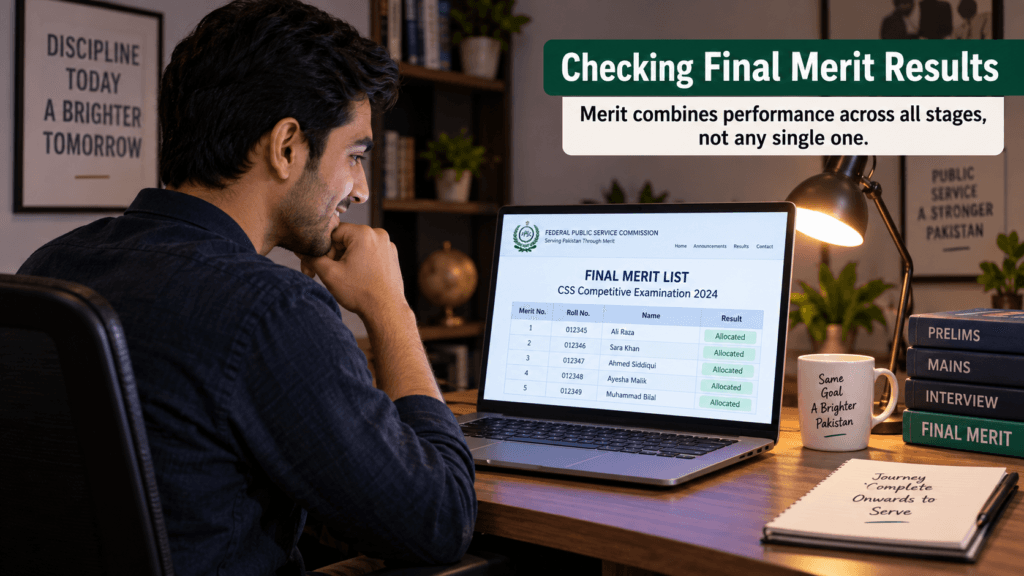
Merit combines performance across all stages, not any single one.
Stage 5: Final Merit List Compilation
Direct Answer: Final selection combines performance across all completed stages — written test, medical, and interview — into an overall merit ranking, rather than any single stage determining the outcome alone.
Practical Guidance: Because merit combines multiple stages, a candidate who performs adequately but not exceptionally across all stages can sometimes rank higher overall than a candidate who excelled in one stage but underperformed in another, which is part of why consistent, well-rounded preparation across every stage — not just the written test — genuinely matters for final selection.
Pro Tip: Understanding that final selection isn’t determined solely by the written test is a useful mindset shift: treating the medical and interview stages as equally important preparation priorities, not afterthoughts once the written test is cleared, reflects how merit is actually calculated.
How CSS and Non-CSS FPSC Selection Process Differs
CSS follows this same five-stage sequence but with a substantially more extensive written test component — multiple compulsory and optional papers rather than a single comprehensive paper — reflecting the exam’s role as the most competitive FPSC-administered process. Non-CSS posts generally follow the same underlying sequence, but often move through it more quickly given the more streamlined written test structure typical of those posts. Understanding which version of this sequence applies to your specific target post helps set realistic expectations for the overall timeline.
Frequently Asked Questions
What are the main stages of the FPSC selection process?
The main stages are application eligibility screening, the written test, medical and psychological examination, the interview, and final merit list compilation combining performance across all completed stages.
Does the written test alone determine FPSC selection?
No — final selection combines performance across the written test, medical examination, and interview into an overall merit ranking, so strong performance across all stages matters more than excelling in just one.
Is the FPSC selection process the same for CSS and other posts?
The general sequence is similar, but CSS involves a substantially more extensive written test component with multiple compulsory and optional papers, while non-CSS posts typically follow a more streamlined version of the same stages.
What happens if I don’t clear the medical examination stage?
Candidates who don’t meet the medical standards appropriate to their specific post are typically not carried forward to the interview stage, regardless of written test performance, since this stage confirms fitness for the role’s specific responsibilities.
Summary
The FPSC selection process moves through five connected stages — eligibility screening, written test, medical examination, interview, and final merit compilation — with CSS following a more extensive version of the same sequence than most non-CSS posts. Understanding that final selection combines performance across every stage, not just the written test, supports more balanced, realistic preparation across the entire process rather than over-focusing on one stage at the expense of others.
Key Takeaways
- Application eligibility screening happens before the written test — incomplete applications are filtered out early.
- The written test is the most demanding stage for CSS specifically, with multiple compulsory and optional papers.
- Medical and psychological examination confirms fitness appropriate to the specific post’s responsibilities.
- The interview evaluates judgment and communication separately from written test performance.
- Final merit combines all stages — consistent performance across every stage matters more than excelling in just one.
Suggested Reading
FPSC Complete Guide · FPSC Test Syllabus and Pattern · FPSC Interview Preparation Guide
Official Resources
For current selection process timelines and results, check the official FPSC website.