
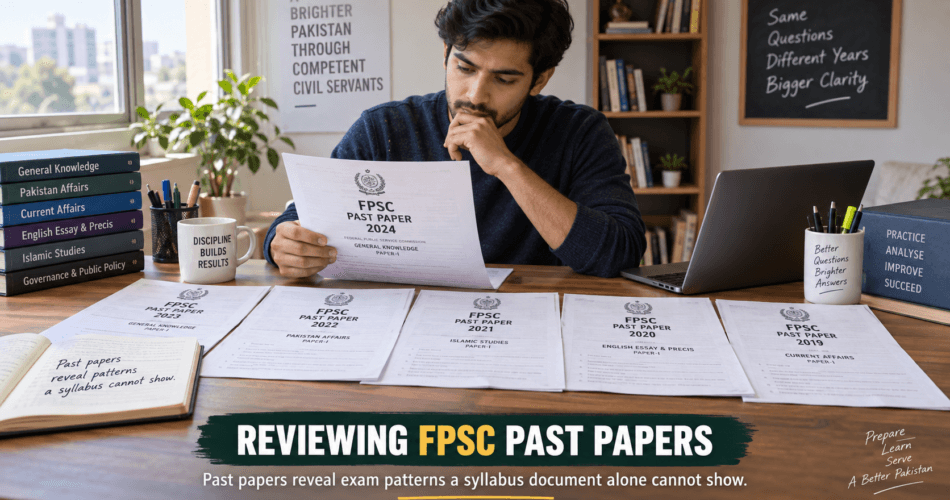
FPSC Past Papers and Preparation Strategy
Quick Answer: FPSC past papers are most useful when treated as a diagnostic and pattern-recognition tool rather than a source of questions to memorize directly, since FPSC doesn’t repeat exact questions across cycles. Effective use means identifying recurring topic areas and question formats, practicing under timed conditions to build pacing, and using early attempts to honestly assess which sections need the most preparation — rather than simply reading through papers passively and assuming familiarity equals readiness.
Many candidates collect years of FPSC past papers but use them ineffectively — skimming through them once, feeling reassured by recognition, and moving on without genuinely testing themselves. Past papers are one of the most valuable preparation tools available, but only when used deliberately. This guide explains how to actually extract value from FPSC past papers, whether you’re preparing for CSS or another FPSC-administered post.
Table of Contents
- Why Past Papers Matter So Much
- Using Past Papers as a Diagnostic Tool
- Spotting Patterns Without Expecting Repeats
- Timed Practice: The Most Underused Technique
- Building a Practice Schedule
- Common Mistakes
- Frequently Asked Questions
Why FPSC Past Papers Matter So Much
Direct Answer: Past papers reveal the actual pattern, difficulty level, and recurring topic areas of the real exam in a way that a general syllabus document alone cannot.
A syllabus tells you what topics might appear; past papers show you how those topics have actually been tested, at what depth, and in what format — multiple choice, short answer, or essay-style, depending on the specific paper. This practical insight is why past papers are considered essential preparation material rather than optional supplementary reading.
Using FPSC Past Papers as a Diagnostic Tool
Direct Answer: The most effective first use of FPSC past papers is diagnostic: attempting a full paper early in your preparation, under timed conditions, to honestly identify which sections need the most work before you start deep studying.
This honest baseline assessment often reveals gaps candidates didn’t expect — strong general knowledge but weak essay structure, for example, or solid content knowledge but poor time management under exam conditions. Skipping this diagnostic step and jumping straight into content study risks allocating preparation time based on assumption rather than actual performance data.
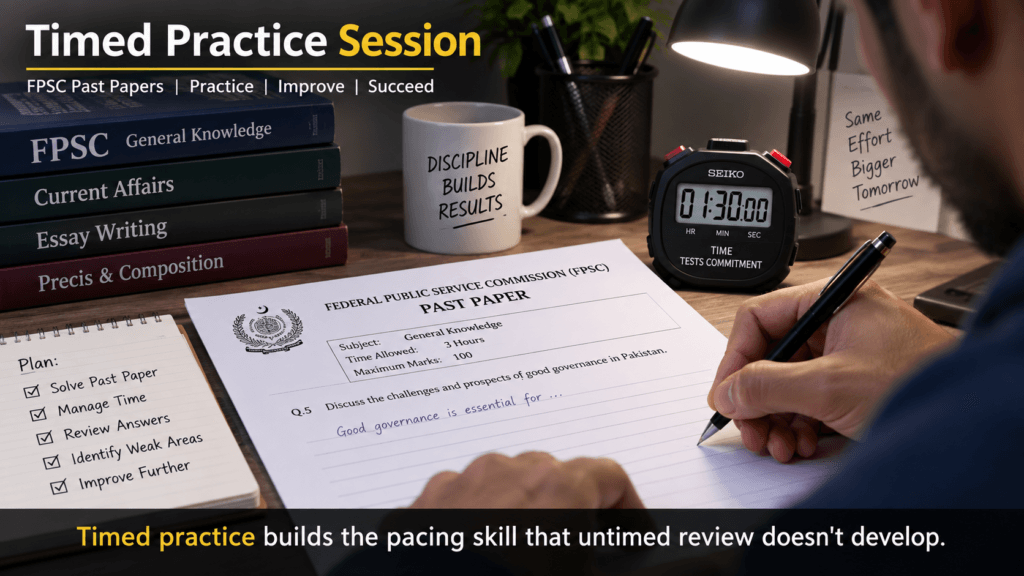
Timed practice builds the pacing skill that untimed review doesn’t develop.
Spotting Patterns Without Expecting Repeated Questions
Direct Answer: Reviewing multiple years of past papers reveals recurring topic areas and question formats, but FPSC generally doesn’t repeat exact questions, so the goal is pattern recognition, not memorization.
Noticing that a particular topic area appears consistently across several years’ papers is genuinely useful preparation signal — it suggests that topic deserves solid coverage in your study plan. Memorizing specific answers to specific past questions, expecting them to reappear verbatim, is a much less reliable strategy and can leave you unprepared for how that same topic area is tested differently in the actual exam.
Timed Practice: The Most Underused Technique
Direct Answer: Attempting past papers under strict timed conditions, matching the real exam’s time limits, builds the pacing skill that untimed review or passive reading doesn’t develop.
Many candidates who know the content well still struggle on exam day simply because they’ve never practiced managing their time across a full paper under pressure. Building this skill specifically through timed past-paper attempts, ideally simulating the actual exam environment as closely as practical, closes a gap that content knowledge alone doesn’t address.
Examples: A candidate who has always studied at a relaxed pace may discover, through a timed past-paper attempt, that they consistently run out of time on the final section — a problem no amount of additional content study would have revealed or solved.
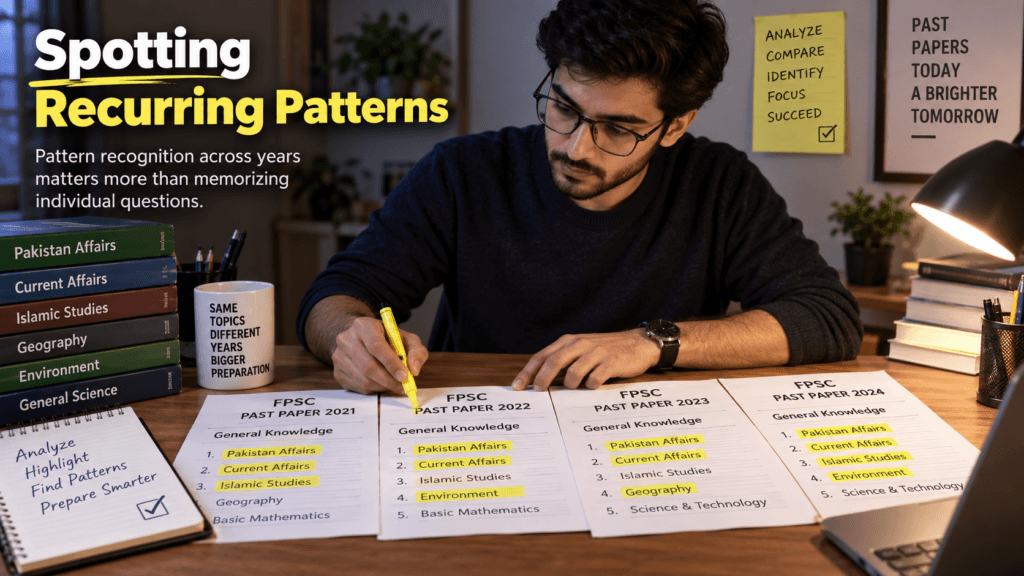
Pattern recognition across years matters more than memorizing individual questions.
Building a Past Paper Practice Schedule
Direct Answer: Spacing out past paper attempts across your preparation timeline — an early diagnostic attempt, periodic practice attempts as preparation progresses, and full timed simulations closer to the exam — generally works better than saving all past paper practice for the final weeks.
Practical Guidance: This spacing lets you apply what you’ve learned from earlier attempts to subsequent study, rather than discovering gaps too late to meaningfully address them. Treating past papers as an ongoing feedback loop throughout preparation, not a final review step, is what separates candidates who genuinely improve from those who simply confirm existing gaps too late to fix them.
Common Mistakes When Using Past Papers
Reading through past papers passively, without actually attempting them under exam-like conditions, is the most common way candidates waste this resource. Expecting exact questions to repeat and focusing preparation on memorizing specific past answers, rather than understanding underlying topic areas, leaves candidates unprepared for how those topics are tested differently. Finally, saving all past paper practice for the final weeks before the exam, rather than spacing it throughout preparation, means gaps get identified too late to meaningfully address.
Frequently Asked Questions
Do FPSC past papers repeat exact questions?
Generally no — FPSC doesn’t typically repeat exact questions across cycles, so the value of past papers lies in recognizing recurring topic areas and question formats, not memorizing specific past answers.
How many years of FPSC past papers should I review?
Reviewing several recent years generally gives a reliable sense of recurring patterns, though the exact number that’s useful depends on how much material is available for your specific post and how thoroughly you’re able to engage with each paper.
Should I time myself when practicing with past papers?
Yes, timed practice builds the pacing skill that untimed review doesn’t develop, and many candidates who know the content well still underperform simply due to poor time management they never identified before the actual exam.
When should I start using FPSC past papers in my preparation?
Starting early, with a diagnostic attempt before deep content study, and continuing periodically throughout preparation, generally works better than saving all past paper practice for the final weeks before the exam.
Summary
FPSC past papers are most valuable as a diagnostic and pattern-recognition tool, revealing recurring topic areas, question formats, and — through timed practice specifically — genuine pacing gaps that content study alone doesn’t address. Using them deliberately and throughout your preparation timeline, rather than passively skimming them once or saving them for a last-minute cram, is what turns this resource into a genuine preparation advantage.
Key Takeaways
- Past papers reveal the actual exam pattern and difficulty in a way a syllabus document alone cannot.
- FPSC generally doesn’t repeat exact questions — focus on pattern recognition, not memorization.
- Timed practice builds pacing skill that untimed review doesn’t develop.
- An early diagnostic attempt reveals genuine preparation gaps before deep content study begins.
- Spacing past paper practice throughout your timeline works better than saving it all for the final weeks.
Suggested Reading
FPSC Complete Guide · FPSC Test Syllabus and Pattern · FPSC Application Process Step-by-Step
Official Resources
For official past paper archives where available, check the official FPSC website.