
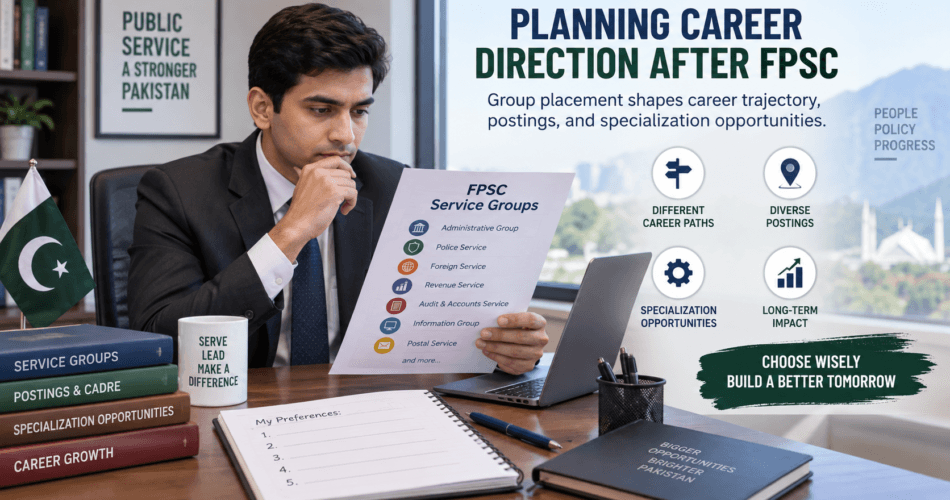
Career Paths and Departments After FPSC
Quick Answer: Career paths after FPSC selection depend heavily on which specific service group or department a candidate is placed into, since CSS alone spans several distinct groups — including administrative, foreign, and police service tracks, among others — each with its own career trajectory, typical postings, and specialization opportunities. Career growth generally follows a structured, rank-and-tenure-based promotion system rather than an open-market trajectory, with officers often developing deeper expertise in a specific policy area or function as their career progresses.
Passing the FPSC selection process is the beginning of a career, not the end of the planning that matters. Understanding what career paths actually look like after selection — how placement into specific groups works, what career progression generally involves, and how specialization develops over time — helps candidates think beyond just clearing the exam toward the actual career ahead.
Table of Contents
- How Placement Into Specific Groups Works
- Typical Career Progression
- Developing Specialization Over a Career
- Typical Postings and Geographic Mobility
- Long-Term Career Planning
- Common Misunderstandings
- Frequently Asked Questions
How Placement Into Specific Groups Works
Direct Answer: For CSS specifically, final placement into a specific service group is generally determined by overall merit ranking combined with candidate preference, meaning higher-ranked candidates typically have more flexibility in choosing their preferred group.
This is why understanding the different CSS service groups — their typical responsibilities, career trajectory, and postings — before the exam, not after results are announced, helps candidates think through preference ordering more deliberately rather than defaulting to name recognition alone.
Typical Career Paths After FPSC Selection Progress
Direct Answer: Career paths after FPSC selection generally follow a structured progression through defined ranks or grades, combining minimum tenure requirements, performance evaluation, and completion of required training courses at various career milestones.
This structured progression is part of what distinguishes civil service career paths from many private-sector trajectories — officers generally have clearer visibility into what’s required for advancement, even though meeting those requirements doesn’t guarantee promotion if positions at the next level are limited relative to eligible candidates.
Rotating through different postings early on builds broad experience before specializing.
Developing Specialization Over a Career
Direct Answer: Many officers develop deeper specialization in a specific policy area, function, or region as their career progresses, often through a combination of postings, additional training, and accumulated experience in a particular domain.
This specialization isn’t typically chosen at the point of initial placement but develops gradually — an officer might rotate through several different postings early in their career before specializing more deliberately in a specific area once they’ve identified genuine interest and aptitude through that early experience.
Typical Postings and Geographic Mobility
Direct Answer: Postings after FPSC selection can vary significantly in location and role, and new officers should generally expect meaningful geographic mobility, particularly in the earlier years of their career.
This mobility pattern differs by service group — some CSS groups involve more geographically varied postings than others, which is part of why understanding a specific group’s typical posting pattern before choosing it matters for candidates with strong location preferences.
Examples: An officer in a group with significant field-posting responsibility might move between different regions periodically throughout their career, while an officer in a more centrally-based function might experience less geographic variation over the same period.
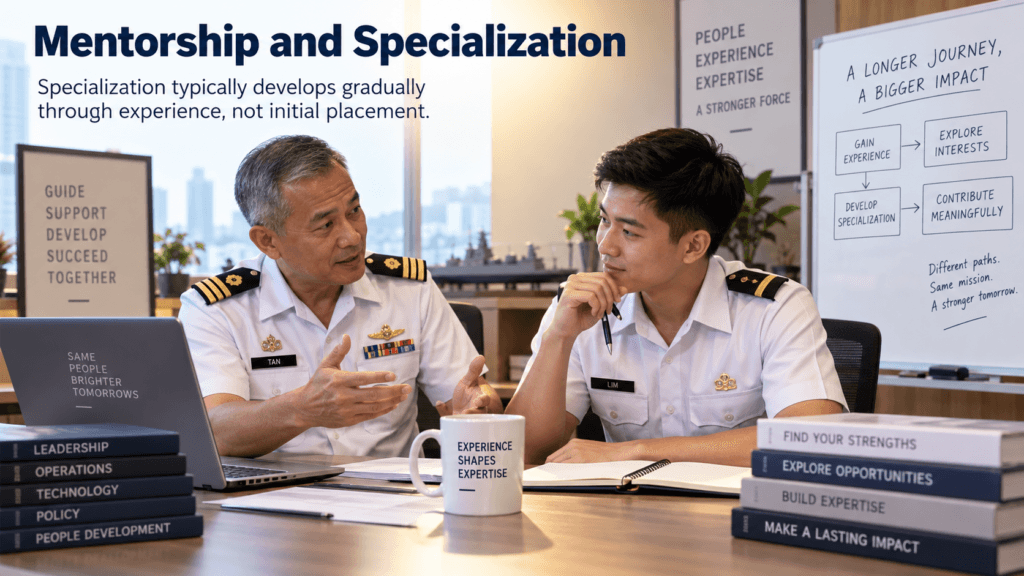
Specialization typically develops gradually through experience, not initial placement.
How to Think About Long-Term Career Planning
Direct Answer: Long-term career planning after FPSC selection benefits from viewing the early years as a period of building broad experience before specializing, rather than expecting a fully defined career trajectory from day one.
Practical Guidance: Officers who stay genuinely open to different postings and assignments early on, rather than resisting anything outside a narrow preferred track, often develop a broader skill set that supports stronger career options later, even if it means some initial assignments aren’t their first preference.
Pro Tip: A practical mindset: treat the first several years after selection as a period for discovering genuine strengths and interests within your service group, rather than assuming your initial placement fully determines your entire career trajectory from the outset.
Common Misunderstandings About Post-FPSC Careers
Assuming initial group placement or first posting permanently determines an entire career trajectory, without accounting for how specialization and preference genuinely develop over time, is a common misunderstanding. Assuming promotion happens automatically based purely on tenure, without accounting for performance evaluation and course completion requirements, oversimplifies how advancement actually works. Finally, underestimating the degree of early-career geographic mobility some service groups involve can lead to unrealistic expectations about the first several years specifically.
Frequently Asked Questions
How is placement into a specific CSS group decided?
Placement is generally determined by overall merit ranking combined with candidate preference, meaning higher-ranked candidates typically have more flexibility in securing their preferred group among the available CSS service groups.
Do career paths after FPSC selection differ significantly by service group?
For career paths after FPSC specifically, yes, significantly — different CSS service groups involve different typical responsibilities, postings, and career trajectories, which is why understanding these differences before the exam helps inform more deliberate preference ordering.
Is promotion automatic once I’ve served a minimum tenure?
No — while minimum tenure requirements typically apply, actual promotion also depends on performance evaluation and completion of required training courses at various career milestones, not tenure alone.
How much geographic mobility should I expect after FPSC selection?
This varies by specific service group, with some groups involving more geographically varied postings than others, particularly in the earlier years of a career — researching your target group’s typical posting pattern helps set realistic expectations.
Summary
Career paths after FPSC selection depend heavily on which service group a candidate is placed into, with career progression generally following a structured, tenure-and-performance-based promotion system rather than automatic advancement. Understanding how placement, specialization, and geographic mobility typically work — before rather than after selection — helps candidates plan more realistically for the actual career ahead, not just the exam that opens the door to it.
Key Takeaways
- CSS group placement is generally determined by merit ranking combined with candidate preference.
- Career progression follows a structured combination of tenure, performance evaluation, and required training.
- Specialization typically develops gradually over a career rather than being chosen at initial placement.
- Geographic mobility varies significantly by service group, particularly in the early career years.
- Long-term career planning benefits from viewing early years as a period for building broad experience before specializing.
Suggested Reading
FPSC Complete Guide · FPSC Selection Process Overview · CSS vs PMS Explained
Official Resources
For current information on CSS service groups, check the official FPSC website.