
Pak Army Short Service Commission Guide
Quick Answer: Pak Army Short Service Commission offers a fixed-term officer role rather than a full-career commitment, with its own age bracket, eligibility criteria, and selection process that broadly mirrors Long Course — written test, physical standards, and ISSB — but leads to a different service structure and career outcome afterward. It generally suits graduates who want genuine officer-level military experience without committing to a full-length service career, though the tenure structure and post-service transition are worth understanding before applying.
Short Service Commission is often described as “Long Course but shorter,” which undersells how different the two paths actually are in practice, not just in duration. This guide explains what Short Service Commission actually involves, how its eligibility and selection process compares to Long Course, what the fixed tenure structure means for your career planning, and what happens after the service term ends — information that matters as much as the entry process itself.
Table of Contents
- What Short Service Commission Actually Is
- Eligibility and Age Bracket
- How the Selection Process Compares to Long Course
- Tenure Structure and What Happens After
- Who Short Service Commission Suits Best
- Common Mistakes When Considering This Path
- Frequently Asked Questions
What Pak Army Short Service Commission Actually Is
Direct Answer: Short Service Commission is a fixed-term officer commission, meaning candidates serve a defined tenure rather than a full career-length commitment, while still holding genuine officer rank and responsibility during that period.
This isn’t a lesser or training version of officer service — Short Service Commission officers hold real command and operational responsibility during their tenure, the key difference is the defined end point built into the commitment from the start rather than an open-ended career. This structure appeals specifically to candidates who want the officer experience and leadership development without committing to decades of service.
Eligibility and Age Bracket
Direct Answer: Pak Army Short Service Commission generally allows a somewhat wider age bracket than Long Course, reflecting its shorter service structure, though the exact current range should be confirmed against the official notification.
Educational requirements commonly center on a completed bachelor’s degree, which differs from Long Course’s acceptance of intermediate-level candidates in some schemes. This tends to attract slightly older applicants — often recent graduates rather than candidates applying straight out of intermediate — who are specifically weighing a defined-term military experience against other early-career options.
How the Selection Process Compares to Long Course
Direct Answer: Short Service Commission selection follows broadly the same structure as Long Course — written test, physical and medical screening, and ISSB — but the specific written test content and physical standards are calibrated for this scheme rather than shared identically.
ISSB itself evaluates the same core qualities — leadership, psychological suitability, group behavior — regardless of entry scheme, so candidates who’ve researched ISSB preparation for Long Course will find that preparation largely transfers to Short Service Commission as well. The written test syllabus, however, should be checked specifically for this scheme rather than assumed identical to Long Course’s.
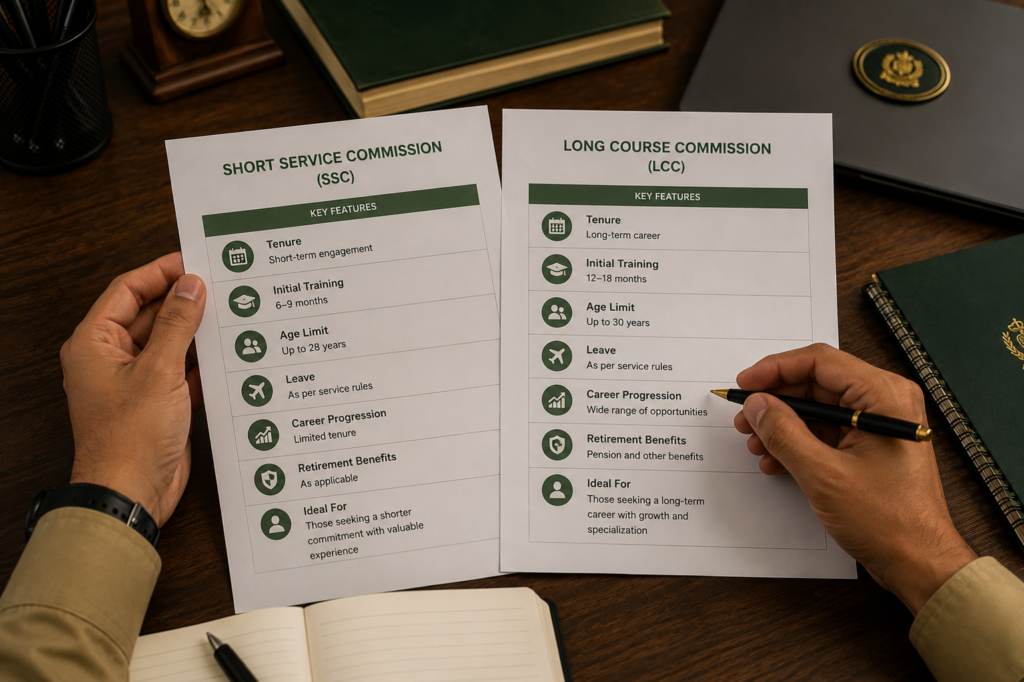
Selection largely mirrors Long Course, but written test content differs by scheme.
Tenure Structure and What Happens After
Direct Answer: Short Service Commission tenure is defined at the point of commissioning, and officers typically have some structured options at the end of their term, including possible extension or transition pathways, depending on current policy and performance.
This is one of the most important things to understand before applying: the post-tenure transition isn’t automatic or guaranteed in a specific direction, and officers should research current policy on extension eligibility and civilian transition support rather than assuming a particular outcome. Planning your post-tenure direction — further study, a civilian career transition, or seeking extension — is worth thinking through before you commit to the initial application, not after your term is already underway.
Who Short Service Commission Suits Best
Direct Answer: Short Service Commission tends to suit graduates who want genuine officer-level leadership experience and are drawn to military service, but who aren’t certain they want it as a full-length career, or who have specific post-service plans in mind.
Practical Guidance: If you’re fundamentally unsure whether military service is right for you long-term, Short Service Commission’s defined tenure offers a way to genuinely experience officer service without the open-ended commitment Long Course represents. If you’re certain military service is your long-term career goal, Long Course’s path to a permanent commission may align better with that certainty from the start.
Pro Tip: A practical way to decide on Pak Army Short Service Commission: research what specific post-tenure options exist under current policy before applying, since your comfort with that transition period matters as much as your interest in the service period itself.
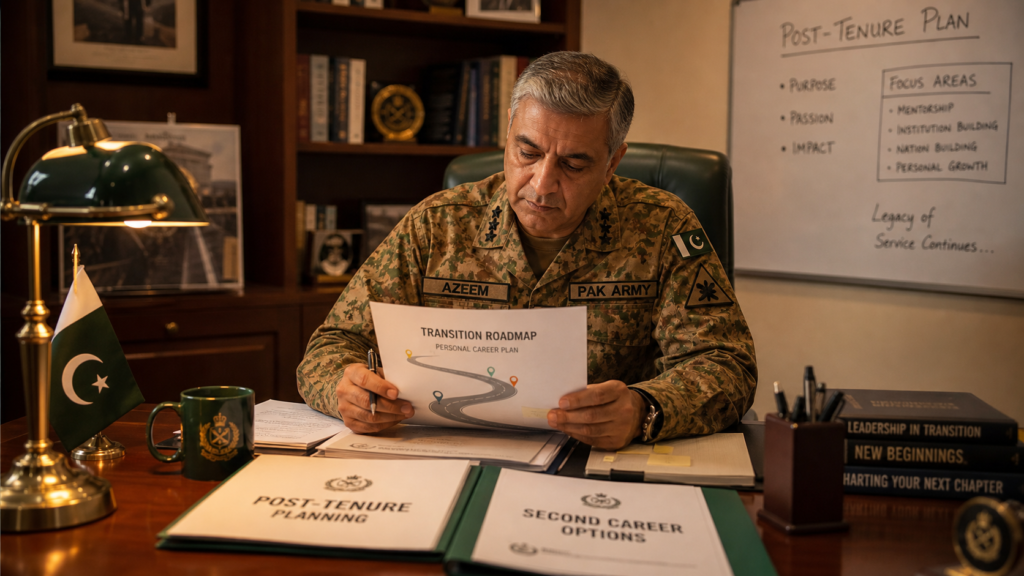
Researching transition options before applying avoids uncertainty later.
Common Mistakes When Considering This Path
Choosing Short Service Commission purely because its age bracket is more accessible, without genuinely wanting the fixed-term structure specifically, sometimes leads to a mismatch candidates only recognize partway through their tenure. Assuming the post-service transition will be automatic or guaranteed in a specific direction, rather than researching current policy, is another frequent and avoidable mistake. Finally, underpreparing for ISSB because “it’s just Short Service, not Long Course” ignores that ISSB’s evaluation standard doesn’t relax based on which scheme you’re applying through.
Frequently Asked Questions
How is Pak Army Short Service Commission different from Long Course?
The core difference is tenure: Short Service Commission is a fixed-term officer commission, while Long Course leads to a permanent commission and a full-length career. Both involve genuine officer rank and responsibility, and both go through a broadly similar written test, physical, and ISSB selection process.
What happens after a Short Service Commission tenure ends?
For Pak Army Short Service Commission officers, typically structured options exist at the end of their term, including possible extension or transition pathways, depending on current policy and performance — this isn’t automatic in one specific direction, so researching current policy before applying is worthwhile.
Is the age limit different for Short Service Commission compared to Long Course?
Yes, generally Short Service Commission allows a somewhat wider age bracket than Long Course, though the exact current range should always be confirmed against the official recruitment notification.
Does ISSB preparation differ between Short Service Commission and Long Course?
ISSB itself evaluates the same core leadership and psychological qualities regardless of entry scheme, so preparation largely transfers between the two — the written test content is what’s calibrated specifically per scheme.
Summary
Pak Army Short Service Commission offers genuine officer-level service through a fixed-term commitment, following a selection process broadly similar to Long Course but built around a different career structure and post-tenure transition. Understanding the tenure structure and what happens afterward — not just the entry eligibility — is essential before deciding this path fits your specific career goals better than the alternatives.
Key Takeaways
- Short Service Commission is a genuine, fixed-term officer commission — not a lesser version of Long Course.
- Age eligibility is generally wider than Long Course, and education requirements typically center on a bachelor’s degree.
- ISSB preparation largely transfers between schemes, but written test content should be checked specifically for this path.
- Post-tenure transition options depend on current policy and aren’t automatic in one direction.
- This path tends to suit candidates who want officer experience without an open-ended career commitment.
Suggested Reading
Pak Army Complete Guide · Pak Army Long Course Application Guide · Pak Army Eligibility Criteria · Pak Army Age Limit and Relaxation Rules
Official Resources
For current Short Service Commission eligibility and tenure terms, check the official Pak Army recruitment portal.