
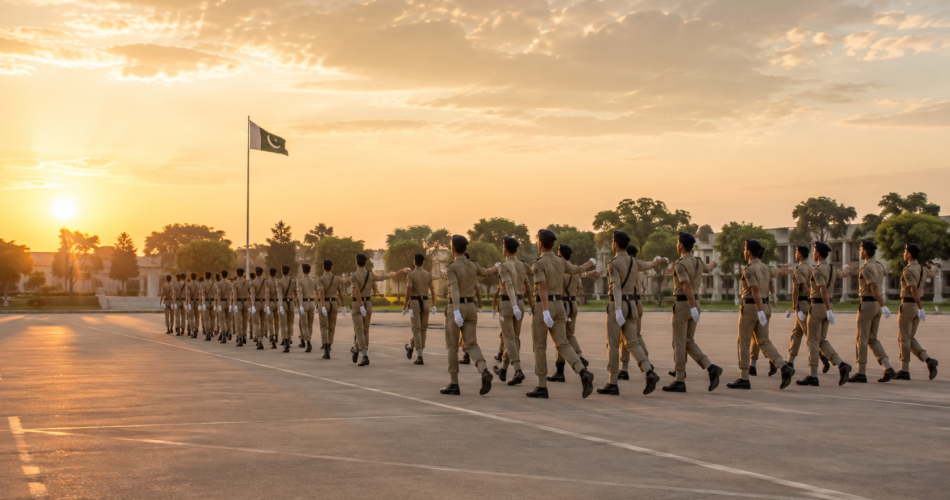
Pak Army Jobs Pakistan: A Complete Career Guide
Quick Answer: Pak Army jobs Pakistan offers span six main entry paths: the Long Course for officer commissioning, Short Service Commission for time-bound officer roles, direct entry for medical, engineering, and other specialists, the Cadet College route for younger students, female entry schemes, and soldier/JCO ranks for non-commissioned service. Each path has its own eligibility, test format, and the ISSB assessment is common to officer-track entries, so the right starting point depends on your age, qualification, and whether you’re aiming for an officer or soldier rank.
Joining the Pakistan Army is a distinct career decision, not simply another government job application. It involves a multi-stage selection process, a service commitment with its own culture and structure, and entry paths that differ significantly depending on your age, education, and whether you’re pursuing an officer or soldier role. This guide maps out the six main entry paths, explains how eligibility and the ISSB assessment generally work, and links to detailed guides on each specific step — from written test preparation to salary structure — so you can prepare for the path that actually fits you.
Table of Contents
- Why Consider a Career in Pak Army
- The Six Entry Paths Into Pak Army
- Eligibility Criteria Overview
- The Selection Process: Written Test, Physical Standards, and ISSB
- Preparing for Your Application
- Common Mistakes Candidates Make
- Salary, Rank Structure, and Career Growth
- Physical Fitness Standards Overview
- What to Expect After Commissioning
- Frequently Asked Questions
Why Consider a Career in Pak Army Jobs Pakistan Offers
Direct Answer: A career in the Pakistan Army offers structured progression, defined pay and pension benefits, and a clear rank-based growth path that’s less common in most civilian careers.
Beyond the practical benefits, service in the armed forces carries a distinct sense of purpose and discipline that draws many candidates specifically, separate from the job-security reasoning that applies to civilian government roles. This is worth being honest with yourself about before applying, since the ISSB assessment process specifically evaluates whether a candidate’s motivation and temperament genuinely fit military service, not just their academic qualifications.
Practical Guidance: If you’re considering this path mainly for financial stability rather than genuine interest in military service, it’s worth researching the day-to-day realities of the specific branch and role you’re considering before committing to the lengthy preparation process.
The Six Entry Paths Into Pak Army
Direct Answer: Pak Army recruitment runs through six main paths: Long Course, Short Service Commission, Direct Entry for specialists, Cadet College route, female entry schemes, and soldier/JCO ranks.
The Long Course is the primary route into a permanent commission as an officer, typically for candidates who’ve completed intermediate or a bachelor’s degree within the required age range. Short Service Commission offers a fixed-term officer role, often attracting graduates who want military experience without a full career-length commitment. Direct Entry exists for specialists — doctors, engineers, and other technical professionals — who join at officer rank based on their existing qualification rather than through the standard cadet pipeline. The Cadet College route is for younger students who join a feeder institution years before actual commissioning. Female entry schemes provide officer-track opportunities across several corps. Soldier and JCO ranks are the non-commissioned path, with different eligibility and a different, though still rigorous, selection process.
| Entry Path | Typical Age Range | Typical Qualification |
|---|---|---|
| Long Course | Late teens to early 20s (scheme-specific) | Intermediate or Bachelor’s |
| Short Service Commission | Early-to-mid 20s (scheme-specific) | Bachelor’s degree |
| Direct Entry (Specialists) | Varies by profession | Relevant professional degree (MBBS, Engineering, etc.) |
| Cadet College Route | Early teens at entry | Matric-level entry, years of feeder training |
| Female Entry Schemes | Scheme-specific | Bachelor’s degree (varies) |
| Soldier / JCO Ranks | Broader range, scheme-specific | Matric to Intermediate |
Exact current age and qualification numbers change periodically — always verify against the official Pakistan Army recruitment source before applying.
Eligibility Criteria Overview
Direct Answer: Eligibility varies by entry path, but generally includes an age range specific to each scheme, a minimum educational qualification, and physical fitness standards that all candidates must meet regardless of path.
Officer-track entries generally require intermediate or bachelor’s-level education depending on the specific scheme, while Direct Entry for specialists requires the relevant professional degree (medicine, engineering, etc.) already completed. Physical standards — height, weight, chest measurement, and vision requirements — apply across nearly all paths and are checked early in the process, so candidates who don’t meet baseline physical requirements are filtered out before investing time in written test preparation.
Practical Guidance: Because exact age brackets and qualification cutoffs are periodically revised, always verify current numbers against the official Pakistan Army recruitment source before beginning preparation — a detailed, currently accurate breakdown lives in the dedicated Eligibility Criteria guide linked below.
The Selection Process: Written Test, Physical Standards, and ISSB
Direct Answer: Officer-track candidates typically go through a written test, a physical/medical screening, and then the ISSB (Inter Services Selection Board) assessment, which is the most distinctive and demanding stage of the process.
The written test covers general knowledge, English, and intelligence/reasoning sections depending on the entry scheme. Candidates who clear it move to physical and medical screening. ISSB is a multi-day residential assessment that evaluates leadership potential, group behavior, psychological suitability, and physical stamina through a structured series of tasks and interviews — it is fundamentally different from a typical civilian job interview and cannot be effectively prepared for through academic study alone.
Examples: A Long Course candidate who performs well on the written test still needs to demonstrate leadership and teamwork during ISSB’s group tasks to be recommended for commissioning — strong academic performance alone doesn’t guarantee selection. This is why candidates who treat ISSB preparation as a separate, dedicated phase generally perform better than those who assume clearing the written test is the hard part.

Matching your age and qualification to the right entry path avoids wasted preparation time.
Preparing for Your Application
Direct Answer: Strong preparation for Pak Army entry means treating the written test, physical standards, and ISSB as three genuinely different things to prepare for, not one combined effort.
Start physical conditioning early, since fitness standards are non-negotiable and take months to build properly, not weeks. Study the written test syllabus for your specific entry scheme rather than generic general-knowledge material. For ISSB specifically, understanding the assessment’s structure and practicing group discussion and leadership-task scenarios matters more than additional academic study at that stage.
Pro Tip: A practical starting point when researching Pak Army jobs Pakistan candidates should consider: identify which of the six entry paths matches your current age and qualification before you begin preparing for any specific test, since preparing for the wrong scheme wastes months you can’t get back given the age-eligibility windows involved.
Common Mistakes Candidates Make
Among candidates pursuing Pak Army jobs Pakistan wide, focusing preparation entirely on the written test while treating ISSB as an afterthought is one of the most common and costly mistakes, since ISSB has a materially different evaluation criteria that written-test preparation doesn’t address. Waiting until the physical test is announced to start conditioning, rather than building fitness well in advance, is another frequent misstep given how demanding the physical standards are. Getting this sequencing right matters more for Pak Army jobs Pakistan applicants than for most other government entry paths, given how age-restricted several schemes are
Salary, Rank Structure, and Career Growth
Direct Answer: Pak Army officer pay follows a structured rank-based scale with defined allowances, and promotion through the ranks follows a formal, time-and-performance-based structure rather than an open marketplace-style promotion process.
Specific current pay figures change with periodic government pay revisions, so this hub intentionally doesn’t state exact numbers — the dedicated Salary and Rank Structure guide linked below covers the current structure in detail. What’s consistent across pay revisions is the underlying structure: pay and allowances scale with rank, and promotion timelines are generally more predictable than in most civilian careers, since they follow a defined institutional process rather than case-by-case employer discretion.
Physical Fitness Standards Overview
Physical standards apply across nearly every entry path and typically cover height, weight proportionality, chest measurement, and vision requirements, alongside a fitness test involving running, push-ups, and other basic conditioning benchmarks. These standards are checked early in the process specifically so candidates who don’t meet them aren’t carried through the more time-intensive written test and ISSB stages. Building general fitness — running endurance particularly — over several months before applying gives a real advantage over starting conditioning only after a test date is announced.

Building fitness months in advance gives candidates a real edge in physical standards
What to Expect After Commissioning
For those who successfully complete one of the Pak Army jobs Pakistan entry paths, commissioning is the start of a structured training period specific to their branch before taking on their first posting. Career progression follows a defined rank structure with periodic courses and assessments tied to promotion eligibility, which is part of why the pay and rank system described earlier in this guide tends to be more predictable than open-market civilian promotion. Postings can vary significantly in location and role, and new officers should expect the first several years to involve more geographic mobility than most civilian careers require.
Frequently Asked Questions
What is the minimum qualification for Pak Army jobs in Pakistan?
For Pak Army jobs Pakistan applicants, it depends on the entry scheme — Long Course and most officer-track entries require at least an intermediate-level qualification, with several schemes requiring a bachelor’s degree, while Direct Entry for specialists like doctors and engineers requires the relevant professional degree already completed.
What is ISSB and why does it matter for Pak Army selection?
ISSB (Inter Services Selection Board) is a multi-day assessment that evaluates leadership, psychological suitability, and physical stamina through structured group and individual tasks. It’s a mandatory stage for officer-track candidates and evaluates fundamentally different qualities than the written test does.
Can women apply for Pak Army jobs in Pakistan?
Yes, several officer-track entry schemes are open to female candidates across specific corps. Eligibility criteria and available roles differ from the general male entry schemes, and the dedicated Female Entry Schemes guide covers this in detail.
How long does the Pak Army selection process usually take?
It varies by entry scheme, but the full process — from written test through ISSB to final medical clearance — commonly takes several months from initial application to final commissioning decision.
Summary
A career through Pak Army jobs Pakistan offers runs through six distinct entry paths, each with its own eligibility and selection process, but nearly all officer-track paths converge on the same core stages: a written test, physical and medical standards, and the ISSB assessment. Understanding which path matches your age and qualification, then preparing specifically for each stage rather than treating the process as one undifferentiated test, is what separates well-prepared candidates from those who apply without a clear strategy.
Key Takeaways
- Pak Army recruitment runs through six main entry paths, each with different eligibility.
- ISSB evaluates leadership and psychological fitness, not academic knowledge — it requires separate preparation from the written test.
- Physical fitness standards take months to build properly and should be started early, not after the test is announced.
- Matching your age and qualification to the correct entry scheme before preparing avoids wasting an application cycle.
- Detailed guides on eligibility, ISSB, syllabus, and salary are linked below for each specific stage.
Suggested Reading
Government Jobs in Pakistan (Complete Guide) · Pak Army Eligibility Criteria · ISSB Interview Preparation Guide · Pak Army Written Test Syllabus · Pak Army Salary and Rank Structure
Official Resources
For current, authoritative recruitment notifications, always check the official Pak Army recruitment portal. This guide will be expanded with additional Pak Army jobs Pakistan resources as each supporting article in this cluster is published.