

Pak Army Written Test Syllabus
Quick Answer: The Pak Army written test syllabus generally covers five main sections: general knowledge (including current affairs and Pakistan studies), English language (grammar and comprehension), mathematics or numerical reasoning, intelligence and logical reasoning, and a subject-specific or technical section for certain entry schemes. The exact weighting and specific topics can vary by entry scheme, so confirming the current syllabus breakdown for your target scheme before beginning preparation is more useful than studying from generic government-test material.
Studying for “a government job test” and studying for the Pak Army written test are not the same preparation, even though they might look similar on the surface. The specific weighting of sections, the style of questions asked, and the depth expected differ from what you’d encounter preparing for FPSC, PPSC, or NTS-administered exams. This guide breaks down what the written test syllabus generally covers, how to build a study plan around it, and which preparation habits actually move the needle versus which ones waste time.
Table of Contents
- The Five Sections of the Written Test Syllabus
- General Knowledge and Current Affairs
- English Language Section
- Mathematics and Intelligence Reasoning
- Building a Study Plan Around This Syllabus
- Common Mistakes When Preparing
- Frequently Asked Questions
The Five Sections of the Pak Army Written Test Syllabus
Direct Answer: The Pak Army written test syllabus typically spans general knowledge, English language, mathematics or numerical reasoning, intelligence and logical reasoning, and a subject-specific section for certain schemes.
General knowledge sections commonly include current affairs, Pakistan studies, and basic science topics. English language sections test grammar, vocabulary, and reading comprehension rather than advanced literary analysis. Mathematics or numerical reasoning covers foundational arithmetic and problem-solving rather than advanced-level material. Intelligence and logical reasoning sections assess pattern recognition and problem-solving speed under time pressure. Subject-specific sections apply mainly to Direct Entry schemes, where a candidate’s professional background — engineering or medicine, for example — is tested more specifically.
General Knowledge and Current Affairs
Direct Answer: General knowledge sections typically test awareness of national and international current events, Pakistan’s history and geography, and basic scientific literacy rather than deep specialist knowledge in any one area.
Because current affairs content changes continuously, this is the section that benefits most from ongoing, regular engagement with news rather than last-minute cramming from a single source close to the test date. Pakistan studies and geography content, by contrast, is more stable and can be studied from standard reference material well in advance.
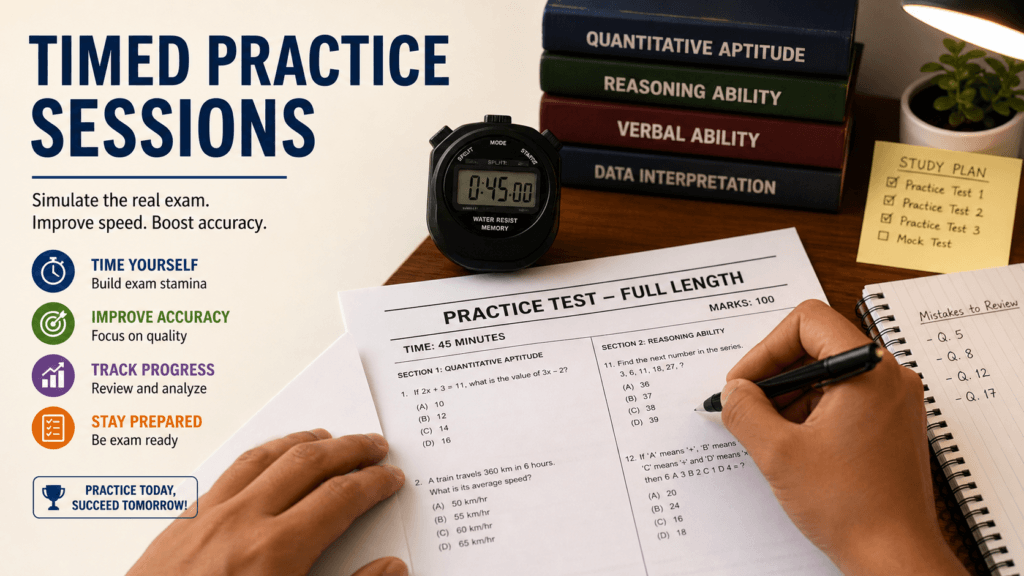
Timed practice builds the pacing skill the actual test requires.
English Language Section
Direct Answer: The English section generally tests grammar accuracy, vocabulary, and reading comprehension at a level intended to confirm functional communication ability rather than advanced literary skill.
Common question formats include sentence correction, fill-in-the-blank vocabulary, and short comprehension passages with follow-up questions. Candidates whose academic background was primarily in a regional language sometimes underestimate how much consistent English practice — reading and writing, not just grammar rules — improves performance here.
Mathematics and Intelligence Reasoning
Direct Answer: Mathematics sections generally cover foundational arithmetic, percentages, ratios, and basic problem-solving, while intelligence reasoning sections test pattern recognition and logical deduction under time pressure.
Neither section typically requires advanced mathematics beyond an intermediate level, but both reward speed and accuracy under time constraints more than they reward depth of knowledge. Practicing timed sets of questions, rather than untimed problem-solving, better simulates actual test conditions and builds the pacing skill the real test requires.
Examples: A candidate who can solve reasoning puzzles accurately but slowly in practice will likely struggle under the test’s actual time limit — this is why timed practice matters as much as understanding the underlying logic.
Building a Study Plan Around This Syllabus
Direct Answer: An effective study plan allocates dedicated time to each of the five sections separately rather than generic general-knowledge study, with more frequent review for time-sensitive content like current affairs.
Practical Guidance: A reasonable structure: dedicate specific weekly time blocks to English and mathematics practice (since these skills build gradually), maintain daily light engagement with current affairs (since this content changes continuously), and run periodic timed full-length practice sessions to build pacing and stamina for the actual test format.
Pro Tip: Starting with a full practice test early in your preparation — before extensive studying — gives you an honest baseline of which sections need the most attention, rather than assuming based on how confident you feel about each area.

Ongoing engagement with current affairs outperforms last-minute cramming.
Common Mistakes When Preparing for the Written Test
Studying from generic “general knowledge for government jobs” material without confirming it matches the Pak Army-specific syllabus weighting is a common and avoidable inefficiency. Neglecting timed practice in favor of untimed study leaves candidates unprepared for the actual pacing demands of the real test. Finally, treating current affairs as something to cram in the final week, rather than maintaining ongoing engagement throughout preparation, tends to produce shallow, easily-forgotten knowledge rather than genuine familiarity.
Frequently Asked Questions
What subjects are covered in the Pak Army written test syllabus?
The syllabus generally covers general knowledge and current affairs, English language, mathematics or numerical reasoning, intelligence and logical reasoning, and a subject-specific section for certain entry schemes like Direct Entry.
How is the Pak Army written test syllabus different from FPSC or NTS exams?
While there’s overlap in general subject areas, the specific weighting, question style, and depth expected differ across these tests, so studying material designed specifically for the Pak Army syllabus generally outperforms generic government-exam preparation material.
How much time should I spend preparing for the written test?
This depends on your existing strength in each section, but building in several months of preparation — rather than a few weeks — allows for the gradual skill-building that English, mathematics, and timed reasoning practice genuinely require.
Is current affairs knowledge important for the written test?
Yes, general knowledge and current affairs typically make up a meaningful portion of the test, and because this content changes continuously, ongoing engagement throughout your preparation period works better than last-minute cramming.
Summary
The Pak Army written test syllabus spans five main areas — general knowledge, English, mathematics, intelligence reasoning, and a subject-specific section for certain schemes — each requiring a different kind of preparation. Building a study plan that allocates dedicated, timed practice to each section, rather than generic government-exam study, is what separates candidates who walk in genuinely prepared from those relying on general confidence.
Key Takeaways
- The syllabus covers five sections: general knowledge, English, mathematics, intelligence reasoning, and a subject-specific section for some schemes.
- Current affairs content benefits from ongoing engagement rather than last-minute cramming.
- Timed practice matters as much as understanding the underlying material, since the real test rewards speed and accuracy together.
- A full practice test early in preparation reveals an honest baseline of section-by-section strengths and weaknesses.
- Generic government-exam study material doesn’t always match this syllabus’s specific weighting.
Suggested Reading
Pak Army Complete Guide · Pak Army Long Course Application Guide · Pak Army Physical Test Standards
Official Resources
For the current, scheme-specific syllabus breakdown, check the official Pak Army recruitment portal.