
ISSB Preparation Guide
Quick Answer: ISSB preparation is fundamentally different from written test or physical fitness preparation, since ISSB evaluates leadership potential, psychological suitability, and group behavior over a multi-day residential assessment rather than academic knowledge. Effective preparation focuses on understanding the assessment’s actual structure — group tasks, individual interviews, and psychological testing — and practicing genuine self-awareness and teamwork rather than trying to memorize “correct” answers, since ISSB evaluators are specifically trained to identify rehearsed or inauthentic responses.
Many candidates who clear the written test and physical standards underperform at ISSB simply because they treat it as one more test to study for, when it’s actually evaluating something academic preparation doesn’t touch: how you behave under pressure, how you work within a group, and whether your temperament genuinely fits military leadership. This guide explains what ISSB actually assesses, how the multi-day process typically unfolds, and what genuine preparation looks like — as distinct from the written test and physical preparation already covered elsewhere in this cluster.
Table of Contents
- What ISSB Preparation Should Actually Focus On
- The Stages of the ISSB Assessment
- Preparing for Group Tasks and Outdoor Exercises
- Preparing for the Individual Interview
- Physical and Mental Stamina Over Multiple Days
- Common Mistakes During ISSB Preparation
- Frequently Asked Questions
What ISSB Preparation Should Actually Focus On
Direct Answer: ISSB preparation should focus on genuine self-understanding, teamwork practice, and familiarity with the assessment’s structure — not memorizing scripted answers or trying to present a rehearsed version of yourself.
ISSB assessors are specifically trained over years to distinguish authentic responses and behavior from rehearsed performance, which is why candidates who try to “perform” a version of leadership they think evaluators want to see tend to underperform relative to candidates who engage genuinely, even imperfectly, with the tasks presented. This is the single most important mindset shift between written-test preparation and ISSB preparation.
The Stages of the ISSB Assessment
Direct Answer: ISSB typically spans several days and includes intelligence testing, group discussion and outdoor tasks, individual interviews, and psychological testing, with a final board review combining observations across all stages.
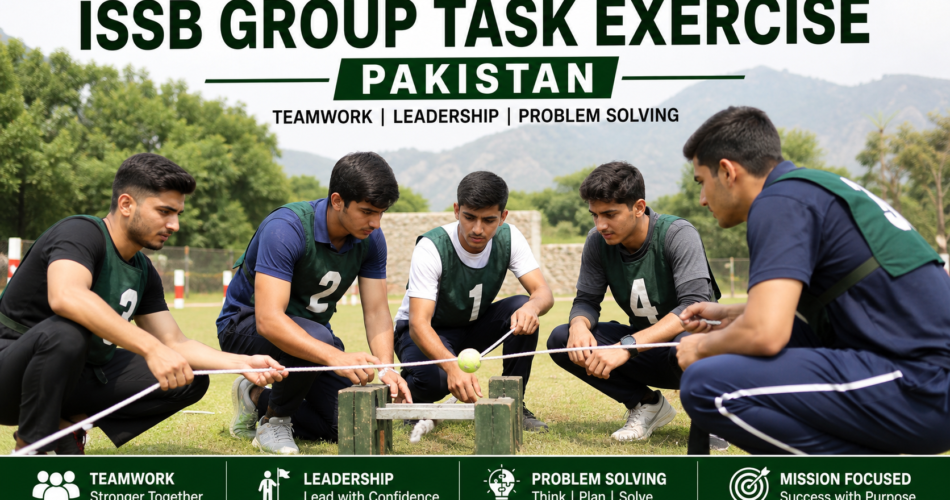
Intelligence testing at ISSB is separate from the earlier written test and focuses on reasoning under a different format. Group tasks — discussions, outdoor problem-solving exercises, and command tasks — are where genuine leadership behavior and teamwork become most visible to assessors. The individual interview explores your background, motivations, and self-awareness in depth. Psychological testing, including projective and personality assessment formats, aims to build a fuller picture of temperament that complements the behavioral observations from group tasks.
Genuine rest between stages supports better focus through the later parts of ISSB.
Preparing for Group Tasks and Outdoor Exercises
Direct Answer: Preparing for group tasks means practicing genuine collaborative problem-solving and communication under pressure, ideally with peers, rather than studying leadership theory in isolation.
Group tasks reward candidates who listen, contribute constructively, and adapt to the group’s dynamic rather than those who try to dominate the conversation or, conversely, stay passive to avoid mistakes. Practicing with a study group specifically on unscripted problem-solving scenarios — not rehearsed presentations — builds the genuine comfort with group dynamics that ISSB actually assesses.
Practical Guidance: If you don’t have access to a formal preparation group, even practicing structured discussions and decision-making exercises with friends or family, focused on genuine give-and-take rather than performance, builds relevant comfort with the format.
Preparing for the Individual Interview
Direct Answer: The individual interview explores your background, motivations for joining, and self-awareness, and preparation here means genuine reflection on your own history and reasons rather than rehearsing a polished narrative.
Interviewers are experienced at probing beyond a rehearsed opening answer, so candidates who’ve genuinely thought through their motivations, strengths, weaknesses, and specific past experiences tend to handle follow-up questions more naturally than candidates relying on a memorized script. Spending time honestly reflecting on your own background before the interview, rather than only preparing “impressive” talking points, produces more consistent, credible answers under follow-up questioning.
Honest self-reflection produces more consistent answers than a memorized script.
Physical and Mental Stamina Over Multiple Days
Direct Answer: ISSB’s multi-day format tests stamina as much as any single task, so arriving well-rested and physically prepared matters alongside the task-specific preparation covered above.
Fatigue accumulates across several days of assessment, and candidates who arrive already physically conditioned (per the physical standards preparation covered elsewhere in this cluster) generally maintain better focus and composure through the later stages than those who arrive underprepared physically. Getting genuine rest in the nights before ISSB begins, rather than last-minute cramming, also supports better performance across the multi-day format.
Common Mistakes During ISSB Preparation
Treating ISSB as an extension of written-test preparation, rather than a fundamentally different kind of assessment, is the most common mistake candidates make. Trying to present a rehearsed, “ideal candidate” persona rather than engaging authentically often backfires, since experienced assessors are specifically trained to notice this. Neglecting physical conditioning ahead of a multi-day assessment, assuming written-test success is enough, leaves some otherwise strong candidates fatigued and underperforming by the later stages. Finally, dominating group discussions to appear “leader-like” rather than demonstrating genuine collaborative leadership often reads as poor group behavior rather than strength.
Frequently Asked Questions
How long does the ISSB assessment typically last?
ISSB is a multi-day residential assessment, generally spanning several days, combining intelligence testing, group tasks, individual interviews, and psychological testing before a final board review.
Can I really prepare for something that evaluates personality and leadership?
Yes, though preparation looks different from academic study — it means practicing genuine group collaboration, honestly reflecting on your own motivations and background, and building physical and mental stamina for the multi-day format, rather than memorizing scripted answers.
Does ISSB preparation differ between Long Course and Short Service Commission?
No — ISSB evaluates the same core leadership and psychological qualities regardless of entry scheme, so the preparation approach described in this guide applies whether you’re pursuing Long Course, Short Service Commission, or another officer-track path.
What do ISSB assessors actually look for in group tasks?
Assessors generally look for genuine collaborative problem-solving, constructive communication, and adaptability within the group dynamic, rather than candidates who dominate the conversation or stay passive to avoid making mistakes.
Summary
Effective ISSB preparation looks fundamentally different from written-test or physical-standards preparation, since it centers on genuine self-awareness, authentic group collaboration, and physical and mental stamina for a multi-day assessment rather than academic study. Candidates who understand this distinction and prepare accordingly — through honest reflection and genuine group practice rather than rehearsed performance — consistently outperform those who treat ISSB as one more test to memorize answers for.
Key Takeaways
- ISSB evaluates leadership, psychological suitability, and group behavior — not academic knowledge.
- Assessors are trained to distinguish authentic responses from rehearsed performance.
- Group task preparation should focus on genuine collaborative practice, not leadership theory alone.
- Interview preparation means honest self-reflection, not a memorized narrative.
- Physical conditioning matters for stamina across the multi-day assessment format, not just the physical test stage.
Suggested Reading
Pak Army Complete Guide · Pak Army Long Course Application Guide · Pak Army Short Service Commission Guide · Pak Army Physical Test Standards
Official Resources
For official ISSB scheduling and process information, check the official Pak Army recruitment portal.