
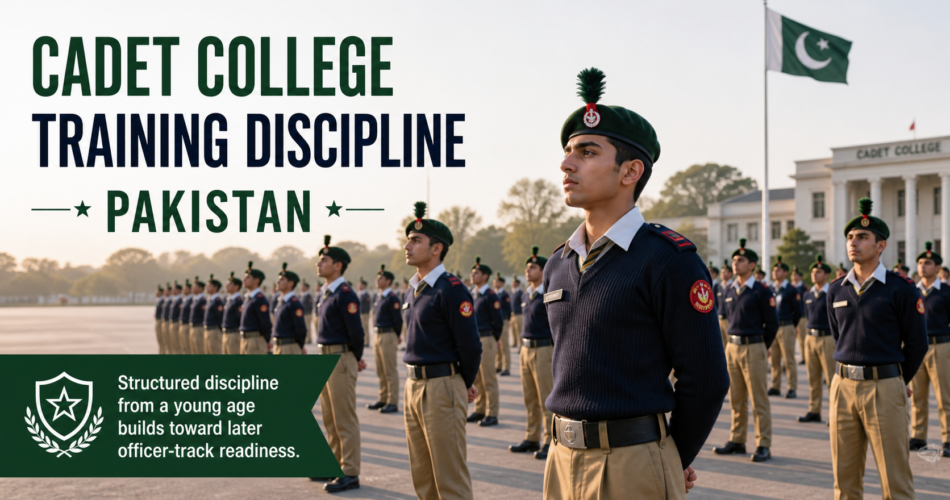
Cadet College Route to Army: Complete Guide
Quick Answer: The Cadet College route to Army is an early-entry pathway for younger students, typically joining a feeder institution at matric level years before actual commissioning, rather than applying directly through Long Course or Short Service Commission after intermediate or a bachelor’s degree. This route combines regular academic education with structured military-style training and discipline throughout secondary and higher-secondary years, giving students a long runway to prepare for later officer entry, though it isn’t the only path into the Army and doesn’t guarantee commissioning on its own.
Parents and younger students researching Pak Army as a future career often come across Cadet College as an option without fully understanding how it differs from the standard entry schemes covered elsewhere in this cluster. This guide explains what Cadet College actually offers, how admission generally works, what the years of training there look like, and how this early-entry route connects to eventual Army commissioning later on.
Table of Contents
- What Cadet Colleges Actually Are
- How the Cadet College Route to Army Actually Works
- Admission Process for Cadet Colleges
- Life and Training at Cadet College
- How This Route Connects to Later Army Entry
- Common Misunderstandings About This Route
- Frequently Asked Questions
What Cadet Colleges Actually Are
Direct Answer: Cadet Colleges are semi-military educational institutions that combine standard academic curriculum with military-style discipline, physical training, and leadership development, typically starting from around matric level.
These institutions aren’t run directly as Army training centers, but rather as feeder institutions designed to prepare students academically and in terms of discipline and physical fitness for eventual officer-track military entry, while still delivering a full academic education recognized outside a military career path as well. This dual structure means Cadet College graduates have options beyond a military career even if they attended specifically with that goal in mind.
How the Cadet College Route to Army Actually Works
Direct Answer: Students join a Cadet College around matric level through a competitive admission process, then spend several years in a structured academic and disciplinary environment before becoming eligible to apply for officer entry schemes like Long Course after completing intermediate.
This means Cadet College itself isn’t a direct commission — it’s preparation. A Cadet College student still needs to apply through and clear the standard Long Course (or another officer-track scheme) selection process, including the written test, physical standards, and ISSB, just like any other candidate. What Cadet College provides is years of preparation, discipline, and often a strong academic and physical foundation that can genuinely improve a candidate’s readiness for that later selection process.
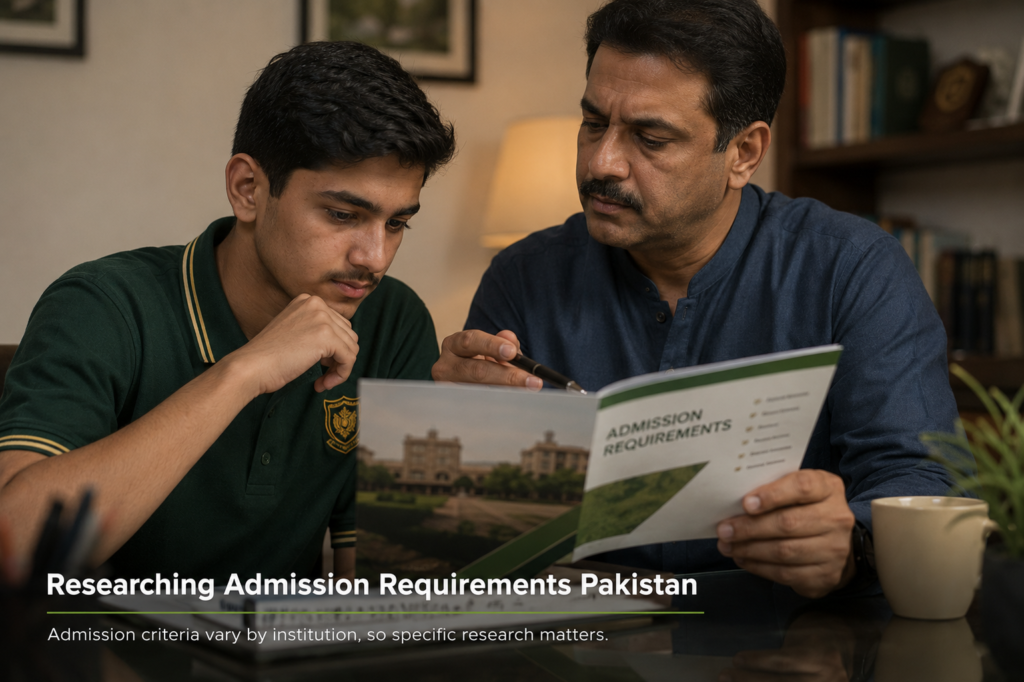
Admission criteria vary by institution, so specific research matters.
Admission Process for Cadet Colleges
Direct Answer: Admission to a Cadet College typically involves an entrance test, an interview, and a medical examination, evaluated against age and academic eligibility specific to each institution.
Because Cadet Colleges are individually administered institutions rather than a single centralized system, specific admission criteria, test format, and intake timing can vary between colleges. Researching the specific admission requirements and timeline for the particular Cadet College you’re considering — rather than assuming one general process applies universally — matters given this institutional variation.
Life and Training at Cadet College
Direct Answer: Students at Cadet College follow a structured routine combining academic study, physical training, and discipline-focused activities, generally more regimented than a typical civilian school environment.
This structure is designed to build habits — punctuality, physical fitness, teamwork, and academic discipline — that translate directly into readiness for the ISSB assessment and officer training later on. Parents and students considering this route should understand that it represents a genuinely different day-to-day experience from a standard school, not simply a school with an added military theme.
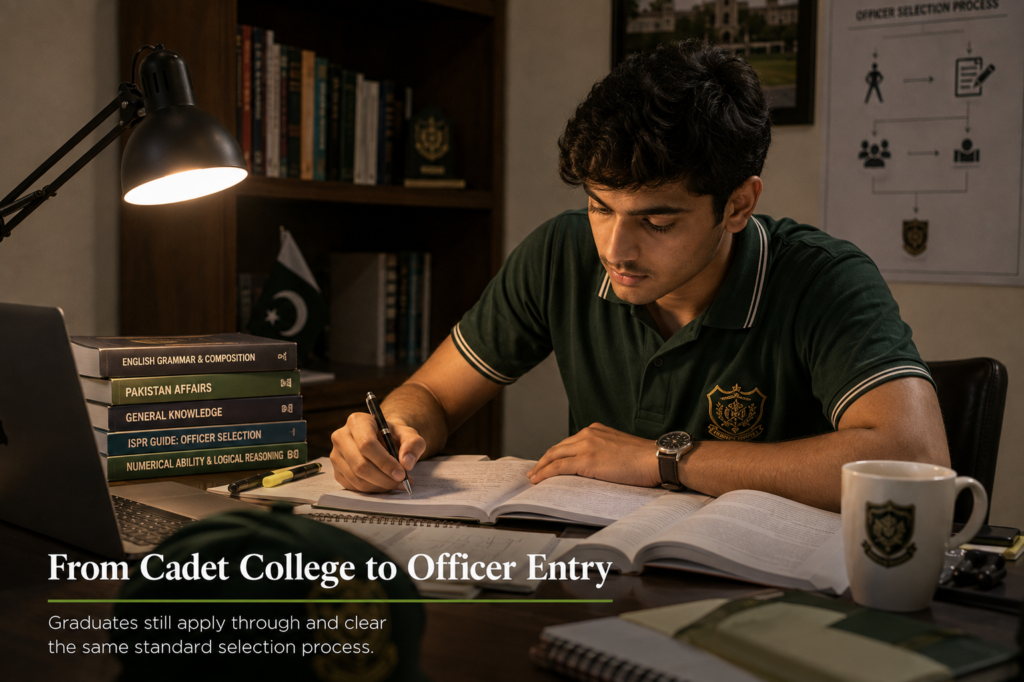
Graduates still apply through and clear the same standard selection process.
How This Route Connects to Later Army Entry
Direct Answer: Cadet College graduates typically apply for Long Course or another officer-track entry scheme after completing intermediate, going through the same selection process as any other applicant rather than receiving automatic commissioning.
Practical Guidance: Because the years at Cadet College build relevant discipline, physical conditioning, and often familiarity with military-adjacent structure, graduates frequently enter the standard selection process with a head start in preparation — but this is an advantage in readiness, not a guarantee of selection, since the written test, physical standards, and ISSB still apply equally.
Pro Tip: If you’re a parent or student weighing the Cadet College route to Army specifically for its Army-preparation value, it’s worth confirming that the specific Cadet College under consideration has a track record of graduates successfully entering officer-track schemes, rather than assuming this outcome automatically for any Cadet College.
Common Misunderstandings About This Route
Assuming Cadet College graduates receive automatic commissioning into the Army, without needing to clear the standard selection process, is a significant and common misunderstanding. Assuming all Cadet Colleges follow an identical admission process and curriculum, rather than checking the specific institution’s own requirements, can lead to preparing for the wrong entrance test format. Finally, treating Cadet College purely as a military preparation track, without recognizing it also delivers a full academic education with value outside a military career, undersells the actual scope of what these institutions offer.
Frequently Asked Questions
Does the Cadet College route to Army guarantee a commission later?
No — for the Cadet College route to Army, graduates still need to apply for and clear the standard officer-track selection process, including the written test, physical standards, and ISSB, just like any other candidate. Cadet College provides preparation and a head start, not automatic entry.
At what age do students typically join a Cadet College?
Most students join around matric level, though the specific age range and intake process vary by institution, so checking the specific Cadet College’s current admission criteria is recommended rather than assuming a universal age.
Is Cadet College only useful for students planning an Army career?
No, Cadet Colleges deliver a full academic curriculum recognized outside a military career path as well, so graduates have options beyond the Army even if they originally enrolled with that specific goal in mind.
Do all Cadet Colleges have the same admission requirements?
No — since Cadet Colleges are individually administered institutions, specific admission criteria, test format, and intake timing can vary, so researching the particular college you’re considering matters more than assuming a single universal process.
Summary
The Cadet College route to Army is an early, preparation-focused pathway rather than a direct commission, combining full academic education with military-style discipline and physical training from around matric level onward. Graduates still need to apply for and clear the standard officer-track selection process afterward, though the years of preparation this route provides can offer a genuine readiness advantage — as long as families understand it as preparation, not a guarantee.
Key Takeaways
- Cadet College is a feeder institution, not a direct commission — graduates still go through standard officer-track selection.
- Admission processes vary by individual Cadet College, so specific institution research matters.
- The route combines full academic education with military-style discipline, offering value beyond a military career path.
- Years at Cadet College can build genuine readiness for ISSB and later selection, but don’t guarantee it.
- Confirming a specific college’s track record with officer-track entry is worthwhile before enrolling for that purpose.
Suggested Reading
Pak Army Complete Guide · Pak Army Long Course Application Guide · ISSB Preparation Guide
Official Resources
For admission details on a specific Cadet College, check that institution’s own official website, and for later officer-track entry, the official Pak Army recruitment portal.