How to Write a Resume Summary or Objective (Pakistan Guide 2026)
Quick Answer: A resume summary or objective sits at the top of your resume — a summary highlights your key experience and skills in 2–3 lines, best for candidates with some work history. An objective states your career goal, best for students or career changers with limited direct experience. Both should be specific, not generic, and tailored to the job you’re applying for.
The top of your resume is the first thing a recruiter reads — and often decides whether they keep reading. This guide covers how to write a strong resume summary or objective, who should use each, and real examples for different career stages in Pakistan.
Table of Contents
- Resume Summary or Objective — What’s the Difference
- When to Use a Summary
- When to Use an Objective
- How to Write a Strong Summary
- How to Write a Strong Objective
- Examples by Career Stage
- Writing Roadmap
- Tips and Common Mistakes
- Frequently Asked Questions
Resume Summary or Objective — What’s the Difference
| Aspect | Resume Summary | Resume Objective |
|---|---|---|
| Focus | What you’ve done and can offer | What you’re looking for |
| Best For | Candidates with relevant experience | Students, career changers, limited experience |
| Length | 2–3 lines | 1–2 lines |
Deciding between a resume summary or objective depends entirely on how much relevant experience you already have.
When to Use a Summary
Best for: Candidates with internships, work experience or clear, demonstrable skills relevant to the role they’re applying for.
Required Skills:
- Concise self-description
- Highlighting your strongest, most relevant qualifications

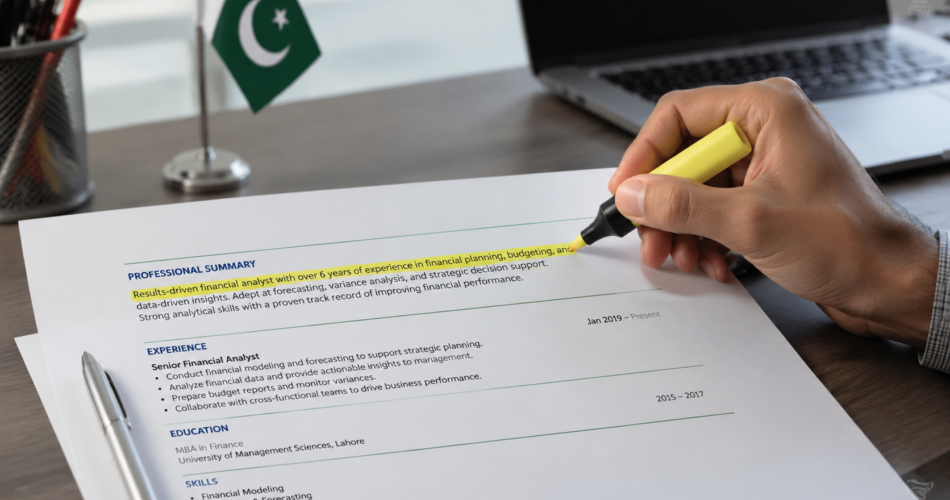
A strong summary highlights relevant experience in just a few lines.
When to Use an Objective
Best for: Students with little to no work experience, career changers, or those applying to a field different from their degree.
Required Skills:
- Clarity about your career direction
- Connecting your background to the specific role, even if not a direct match
How to Write a Strong Resume Summary or Objective
Career Roadmap: Identify Your Strongest Qualifications → Connect Them to the Target Role → Write 2–3 Specific, Concise Lines → Tailor for Each Application
Pro Tip: Include one quantified achievement in your resume summary or objective where possible — it makes the opening lines far more memorable than generic descriptors.
How to Write a Strong Objective
Career Roadmap: Identify Your Target Role/Field → Connect Your Current Skills/Education to It → State Your Goal Clearly and Specifically → Avoid Generic Phrasing

Drafting a clear objective statement helps connect your background to the target role.
Examples by Career Stage
Student/Fresh Graduate (Objective):
“Recent BBA graduate with strong analytical and communication skills developed through two internships in marketing. Seeking an entry-level marketing role to apply research and campaign planning skills at a growth-focused company.”
Mid-Career Professional (Summary):
“Marketing professional with 4 years of experience managing digital campaigns for FMCG brands, including a campaign that increased engagement by 30%. Skilled in social media strategy, analytics and cross-functional team coordination.”
Career Changer (Objective):
“Former banking professional with strong analytical and client relationship skills, transitioning into fintech product management. Currently completing a product management certification to support this shift.”
Writing Roadmap
Identify Career Stage (student/professional/career changer) → Choose Summary or Objective Accordingly → Draft 2–3 Specific Lines → Include One Quantified or Concrete Detail → Tailor for Each Job Application
For general guidance on professional written communication standards, you can also review resources published by the Higher Education Commission of Pakistan.
Tips and Common Mistakes
- Avoid generic phrases like “hardworking team player seeking growth opportunities.”
- Be specific about your field, skills and goal.
- Keep it to 2–3 lines maximum — this section should be scannable in seconds.
- Tailor the summary/objective for each specific job application.
- Avoid restating your entire resume — highlight only the most relevant points.
Frequently Asked Questions
Q1. Should I use a resume summary or objective on my resume?
Use a summary if you have relevant work experience or internships; use an objective if you’re a student with limited experience or changing career direction.
Q2. How long should a resume summary be?
2 to 3 concise lines is generally ideal — long enough to convey your value, short enough to be quickly scanned.
Q3. Can I skip the summary or objective entirely?
It’s generally recommended to include one, as it helps recruiters quickly understand your background and goals, especially in a fast initial resume scan.
Q4. What should a fresh graduate include in their objective?
Mention your degree, relevant skills gained through coursework or internships, and the specific type of role you’re seeking.
Q5. How do I make my summary stand out from generic ones?
Include specific skills, quantified achievements where possible, and details relevant to the specific job, rather than vague adjectives like “dedicated” or “hardworking.”
Q6. Should I mention my career goals in a summary for an experienced professional?
Focus primarily on what you’ve achieved and can offer; career goals are more central to an objective statement, typically used by those with less direct experience.
Q7. Can I use the same resume summary or objective for every job application?
It’s better to tailor it slightly for each application, emphasizing the skills and experience most relevant to that specific role.
Q8. How do I write an objective if I’m changing careers completely?
Focus on your transferable skills and clearly state your new career direction, along with any relevant preparation (courses, certifications) you’re pursuing.
Q9. Is it okay to mention salary expectations in a summary or objective?
No, salary expectations should not be included in your resume summary or objective — this is typically discussed later in the interview process, if at all.
Q10. What’s a common mistake in writing resume summaries?
Using vague, generic language that could apply to any candidate, rather than specific skills and achievements relevant to the role.
Q11. Should students include GPA in their resume objective?
Generally no — GPA can be listed separately in the education section if strong; the objective should focus on skills and career direction instead.
Q12. How do I connect my objective to a job outside my field of study?
Focus on transferable skills gained through your education or experience, and clearly explain your genuine interest in the new field.
Summary
A well-written resume summary or objective sets the tone for the rest of your application. Choosing the right one for your career stage, and writing it with specific, tailored language, significantly improves your chances of catching a recruiter’s attention in those crucial first few seconds.
Key Takeaways
- Use a summary if you have relevant experience; use an objective if you don’t.
- Keep it concise — 2 to 3 lines maximum.
- Include specific skills and quantified achievements where possible.
- Tailor it for each specific job application.
- Avoid generic, vague language that could apply to any candidate.
Suggested Reading
Once you’ve drafted your opening statement, learn how to write a CV for jobs in Pakistan, review our resume tips for fresh graduates, or check how to list skills on your resume.
Official Resources
Readers should verify specific application requirements directly from individual employer job postings.